
Asphyxia Neonatorum
- Apr 2
- 2 min read
1. INTRODUCTION
Asphyxia neonatorum is a life-threatening condition in which a newborn fails to start and maintain breathing at birth.
It leads to decreased oxygen (hypoxia) and increased carbon dioxide (hypercapnia).
Major cause of:
Neonatal mortality
Brain damage (Hypoxic Ischemic Encephalopathy – HIE)
Requires immediate resuscitation within the “Golden Minute”.
2. DEFINITION
Asphyxia neonatorum = Failure of a newborn to initiate and sustain spontaneous respiration immediately after birth.
3. CAUSES
A. Antenatal Factors (Before Birth)
Maternal anemia
Pregnancy-induced hypertension (PIH)
Diabetes mellitus
Infections (TORCH)
Placental insufficiency
IUGR
👉 Effect: Reduced oxygen supply to fetus
B. Intranatal Factors (During Labour)
Prolonged/obstructed labour
Birth trauma
Cord prolapse or cord around neck
Placental abruption
Meconium-stained liquor
👉 Effect: Acute oxygen deprivation during delivery
C. Postnatal Factors (After Birth)
Prematurity
Respiratory distress syndrome
Airway obstruction
Congenital anomalies (heart/lung)
Sepsis
👉 Effect: Failure of breathing after birth
4. CLINICAL MANIFESTATIONS
A. Mild Asphyxia
Delayed cry
Slight cyanosis
HR >100/min
B. Moderate Asphyxia
Poor breathing
HR <100/min
Hypotonia (floppy baby)
Low APGAR score
C. Severe Asphyxia
No breathing (apnea)
HR <60/min
Severe cyanosis/pale
Unconscious
Seizures
5. COMPLICATIONS
A. Immediate Complications
Hypoxic Ischemic Encephalopathy (HIE)
Respiratory distress
Metabolic acidosis
Seizures
Multi-organ failure
B. Long-Term Complications
Cerebral palsy
Developmental delay
Mental retardation
Epilepsy
6. DIAGNOSIS
Based on:
History (difficult labour, fetal distress)
APGAR score (<7)
Blood gas analysis (acidosis)
Clinical signs
7. MANAGEMENT
A. Immediate Resuscitation (Golden Minute)
Step 1: Initial Steps
Provide warmth
Position airway (head slightly extended)
Clear airway (suction if needed)
Dry and stimulate
Step 2: If Not Breathing
Start Bag and Mask Ventilation (BMV) within 1 minute
Give oxygen
Step 3: If Heart Rate <60/min
Start chest compressions
Continue ventilation
Step 4: If No Response
Intubation
Drugs (Adrenaline, fluids)
B. Post-Resuscitation Care
Maintain temperature
Monitor vital signs
Oxygen therapy
IV fluids
Control seizures
NICU admission
8. PREVENTION
Good antenatal care
Early detection of high-risk pregnancy
Skilled birth attendance
Proper intrapartum monitoring
Availability of resuscitation equipment
🚀Here’s a short “exam trick” version for Asphyxia Neonatorum — super quick points you can remember :
Introduction
Asphyxia = Baby fails to breathe at birth
Definition
Failure to initiate and sustain breathing after birth
Causes
👉 Antenatal
Maternal problems = ↓ oxygen to fetus
👉 Intranatal
Labour problems = oxygen cut during delivery
👉 Postnatal
Baby problems = breathing failure after birth
Clinical Manifestations
No cry = No breathing
Cyanosis = Blue baby
HR ↓ = <100/min
Floppy = Low tone
Low APGAR = Birth depression
Complications
HIE = Brain damage
Acidosis = ↑ CO₂
Seizures = Brain injury sign
Death = Severe cases
Management
👉 Initial steps
Warm = Prevent hypothermia
Airway = Position & suction
Stimulate = Start breathing
👉 If not breathing
BMV = Bag & mask ventilation
👉 Severe
CPR = Chest compression + drugs
Prevention
ANC care = Healthy pregnancy
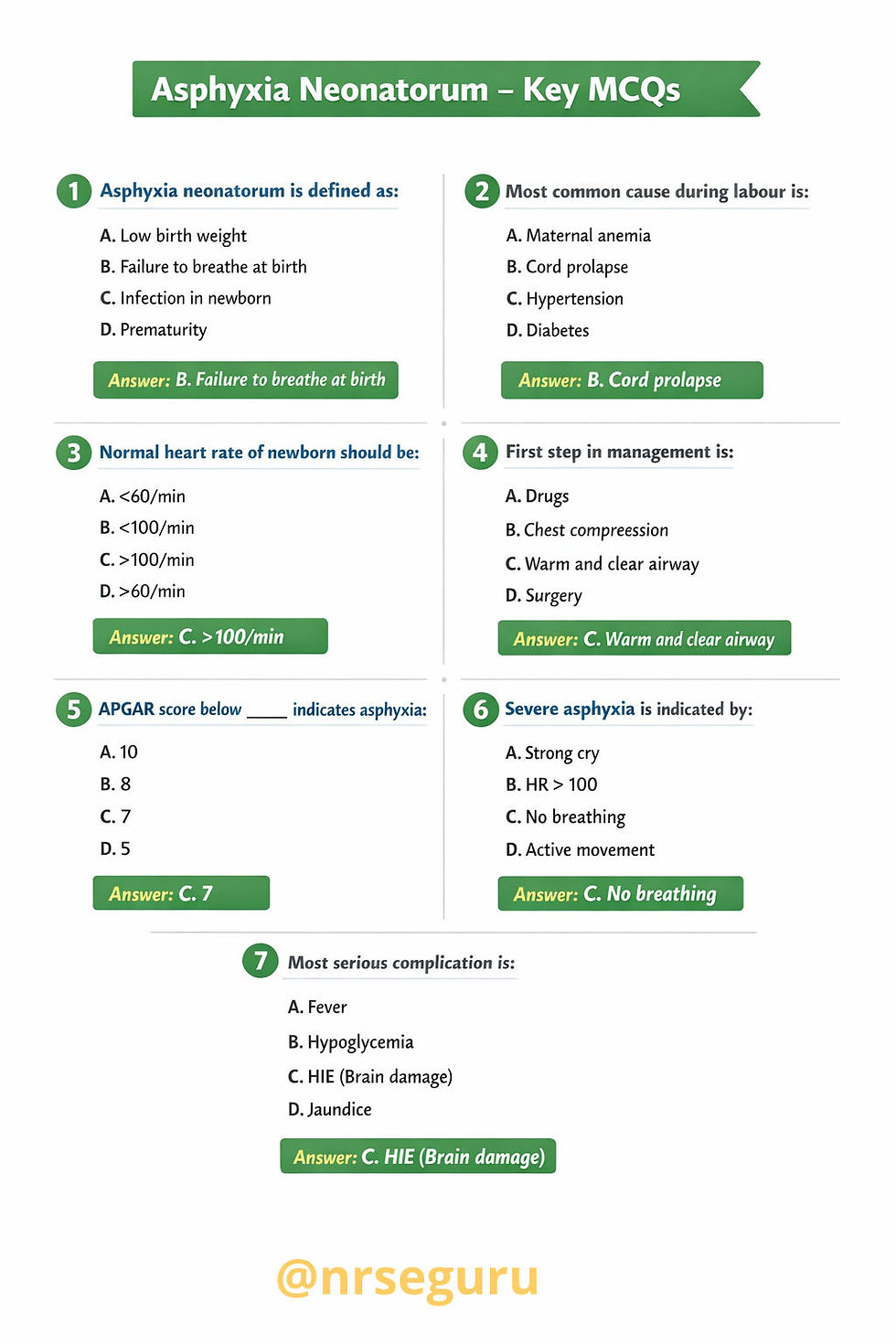
🚀Here’s a set of 07 MCQs on Asphyxia Neonatorum for practice :
Comments