
MICROBIOLOGY – BASIC CONCEPTS (INC SYLLABUS NOTES)
- Apr 16
- 4 min read
1. INTRODUCTION
Microbiology is the branch of science that studies microorganisms (microbes) which are too small to be seen with naked eyes.
Microorganisms are present everywhere:
Air
Water
Soil
Food
Human body
Some microorganisms are beneficial, while others cause disease (pathogens).
Importance in Nursing Practice
Microbiology helps nurses to:
Understand how infections occur
Prevent spread of infection in hospital
Protect patients and themselves
Maintain aseptic techniques
Reduce hospital-acquired infections (HAI)
Role in Disease Prevention
Understanding microorganisms helps in:
Proper hand hygiene
Use of PPE
Sterilization & disinfection
Isolation precautions
Vaccination programs
2. DEFINITION
Microbiology Definition (Exam Ready)
Microbiology is the branch of science that studies microorganisms such as bacteria, viruses, fungi, and parasites which are not visible to naked eye.
Other Important Definitions
Term | Definition |
Microorganism | Living organism too small to be seen without microscope |
Infection | Invasion and multiplication of microorganisms in body |
Pathogen | Disease causing microorganism |
Host | Person or organism infected by microorganism |
Contamination | Presence of microorganisms on object or surface |
3. CLASSIFICATION OF MICROORGANISMS
Types of Microorganisms
Type | Characteristics | Example Disease |
Bacteria | Single-celled organism | TB, Typhoid |
Virus | Smallest microorganism | COVID-19, HIV |
Fungi | Yeast or mold | Candidiasis |
Parasites | Live on host | Malaria |
Protozoa | Single cell parasite | Amoebiasis |
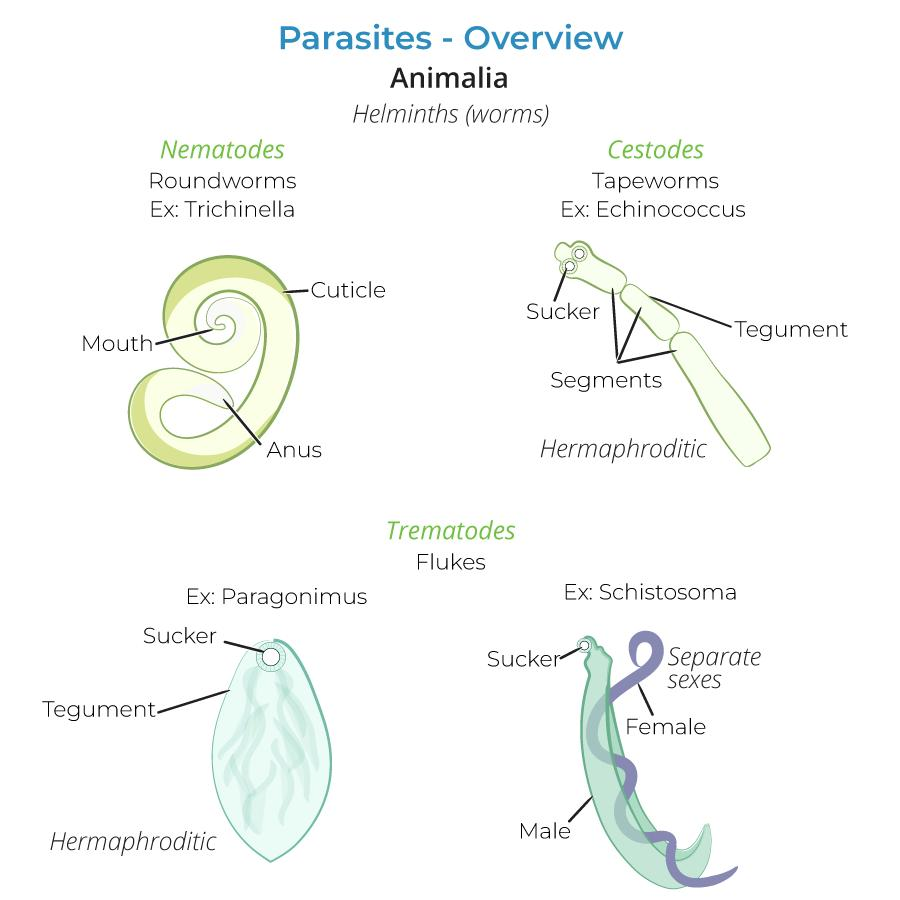
Helminths | Worms | Ascariasis |
4. STRUCTURE / CHARACTERISTICS OF MICROORGANISMS
General Characteristics
Microscopic size
Rapid growth
Present everywhere
Some produce toxins
Some beneficial (gut bacteria)
Example: Bacteria Structure
Part | Function |
Cell wall | Protection |
Capsule | Virulence factor |
Cytoplasm | Metabolism |
Flagella | Movement |
Pili | Attachment |
Nucleus | Genetic material |
5. GROWTH / REPRODUCTION PROCESS
Microorganisms multiply rapidly.
Methods of Reproduction
Microorganism | Method |
Bacteria | Binary fission |
Virus | Replication inside host cell |
Fungi | Budding |
Parasites | Sexual reproduction |
Binary Fission Steps
DNA replication
Cell elongation
Cell division
Two daughter cells formed
Growth Requirements
Nutrients
Moisture
Temperature
Oxygen
pH
6. PATHOGENESIS / MECHANISM OF INFECTION
Pathogenesis = Process of disease development.
Steps of Infection
Entry → Attachment → Multiplication → Toxin production → Tissue damage → Symptoms
Explanation
Microorganism enters body
Attaches to tissue
Multiplies rapidly
Produces toxins
Causes cell damage
Symptoms appear
7. MODES OF TRANSMISSION
Methods of Spread of Infection
Mode | Example |
Direct contact | Touching infected person |
Droplet infection | Cough, sneeze |
Airborne | TB |
Food-borne | Typhoid |
Water-borne | Cholera |
Vector-borne | Malaria |
Blood-borne | HIV |
Fomites | Contaminated objects |
8. CLINICAL MANIFESTATIONS
Common signs and symptoms of infection:
Fever
Pain
Inflammation
Redness
Swelling
Loss of function
Pus formation
Fatigue
9. DIAGNOSTIC METHODS
Laboratory diagnosis helps identify microorganism.
Common Methods
Method | Purpose |
Microscopy | Observe organism |
Culture | Grow microorganism |
Staining | Identify bacteria type |
Blood test | Detect infection |
Serology | Detect antibodies |
PCR | Detect genetic material |
Staining Methods
Gram staining
Acid-fast staining
10. PREVENTION AND CONTROL
Infection Control Measures
Hand hygiene
Use of PPE
Vaccination
Sterilization
Disinfection
Isolation precautions
Environmental cleaning
Levels of Prevention
Level | Example |
Primary | Vaccination |
Secondary | Early diagnosis |
Tertiary | Treatment |
11. NURSING RESPONSIBILITIES IN INFECTION CONTROL
Role of nurse is very important.
Responsibilities
Perform hand washing
Use sterile technique
Use PPE
Dispose biomedical waste properly
Educate patients
Maintain isolation precautions
Prevent cross infection
Follow hospital protocols
Prevent Hospital Acquired Infection (HAI)
Examples:
Catheter care
Wound dressing
Injection safety
12. COMMON DISEASES CAUSED BY MICROORGANISMS
Microorganism | Disease |
Bacteria | Tuberculosis |
Virus | COVID-19 |
Fungi | Ringworm |
Parasite | Malaria |
Protozoa | Amoebiasis |
Helminths | Worm infestation |
13. GERM THEORY OF DISEASE
Definition
Germ theory states that diseases are caused by microorganisms.
Important Scientist
Louis Pasteur proved microorganisms cause disease.
Explanation
Before germ theory, people believed disease was caused by bad air.
Germ theory proved:
Microorganisms cause infection
Infection spreads from person to person
Sterilization prevents disease
I
mportance
Basis of infection control
Development of vaccines
Discovery of antibiotics
14. CHAIN OF INFECTION
Chain of infection explains how infection spreads.
6 Links of Chain
Infectious agent
Reservoir
Portal of exit
Mode of transmission
Portal of entry
Susceptible host
Flowchart
Agent → Reservoir → Exit → Transmission → Entry → Host
Example
TB bacteria → Lung → Cough → Airborne → Respiratory tract → Person infected
15. IMPORTANT SCIENTISTS IN MICROBIOLOGY
Scientist | Contribution |
Antonie van Leeuwenhoek | First microscope |
Louis Pasteur | Germ theory |
Robert Koch | Koch's postulates |
Edward Jenner | Smallpox vaccine |
Joseph Lister | Antiseptic surgery |
Alexander Fleming | Penicillin discovery |
16. STERILIZATION AND DISINFECTION
Sterilization Definition
Process of destroying all microorganisms including spores.
Disinfection Definition
Process of destroying harmful microorganisms but not spores.
Difference Table
Feature | Sterilization | Disinfection |
Microorganisms | All | Most |
Spores | Destroyed | Not destroyed |
Method | Autoclave | Chemical |
Use | Surgical instruments | Floor cleaning |
Methods of Sterilization
Autoclave
Dry heat
Radiation
Filtration
Methods of Disinfection
Alcohol
Chlorine
Phenol
17. PRINCIPLES OF MICROBIOLOGY
Basic principles include:
Microorganisms are everywhere
Some microbes cause disease
Microbes reproduce rapidly
Infection spreads through transmission
Sterilization prevents infection
Immunity protects body
18. ROLE OF NURSE IN INFECTION CONTROL
Key Activities
Assessment
Identify infection signs
Planning
Use aseptic technique
Implementation
Follow isolation protocols
Evaluation
Monitor patient response
Education
Teach hand hygiene
Documentation
Record infection signs
19. CLINICAL RELEVANCE FOR NURSES
Microbiology helps nurses in:
Preventing hospital infection
Maintaining patient safety
Performing sterile procedures
Understanding antibiotics
Protecting immunocompromised patients
Examples:
ICU infection control
Surgical asepsis
COVID precautions
20. QUICK REVISION TABLE
Microorganism | Disease | Transmission | Prevention |
Bacteria | TB | Airborne | Mask |
Virus | COVID | Droplet | Hand wash |
Fungi | Candidiasis | Contact | Hygiene |
Parasite | Malaria | Mosquito | Mosquito control |

Comments